
In the mid-14th to late 15th century, Feudalism was the inherent structure of medieval English society, with the nobility and clergy at the top as the landowners, and the peasants bound by obligations of labor and tribute. A decentralized form of government, medieval feudalism relied on the landowners to keep the peasants in check by exchanging necessary items for survival, such as food, shelter, and trade items, for work on their land– one of the earliest intentional governing bodies operating under a capitalist mindset.
Traditional feudalism relied on three concepts: lords, vassals, and fiefs. A lord was the primary owner of the land, a vassal was granted possession of the land by the lord, and the fief was the land itself. To utilize the fief and to be protected by the lord, the vassal had to perform service for the lord. Within medieval England, however, there wasn’t a singular lord-vassal relationship. Rather, the King was the owner of all the land, and thus the highest lord. The noblemen were his vassals, and their service was to assume the position of a lord over the portion of the fief they used. The peasantry were the vassals of the noblemen, performing long hours of often strenuous labor in exchange for protection under the lords and a meager percentage of the harvest, forming the bottom of the hierarchal pyramid.
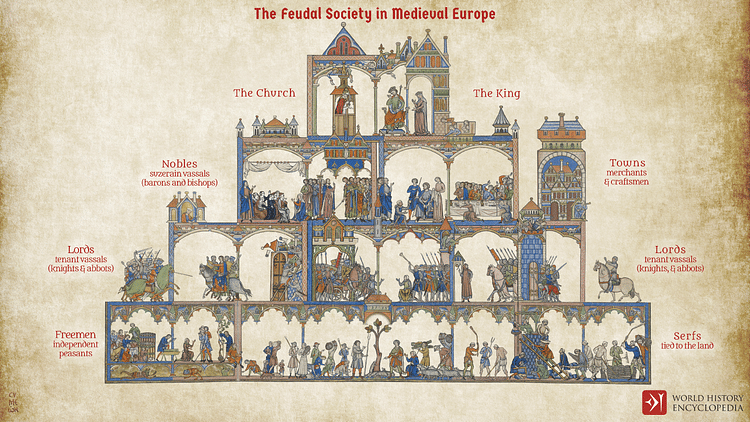
This form of incredibly decentralized government was necessary as England at the time didn’t have the bureaucratic infrastructure to support and control the soldiers they had stationed over their land. Over time, these soldiers secured a hold over the land they occupied, and with the power they gained in controlling that land and those living there, they were granted social, political, and economic power over the area. As the soldiers worked under the king, it was only fitting that they remained at their stations, comfortable in their power and exercising control over the lower classes.
The king, and by extension, his government, was intrinsically tied to the church. The Catholic Church was the dominant religious institution at the time, holding significant influence over daily life, customs, politics, and societal norms. However, by the mid-14th century, its authority was increasingly challenged due to widespread corruption and internal issues. Practices like simony (the selling of church offices), nepotism, and absenteeism (the neglect of church responsibilities) among clergy members undermined both the Church’s credibility and its likeability among the masses and marked the beginning of England’s increasingly rocky relationship with Rome.
Both the systems of Feudalism and the Catholic church faced significant strain when the Black Death, which killed nearly one-third of England’s population, created significant labor shortages. As demand increased and supply diminished, peasants were able to demand higher wages and better conditions, upsetting the power structures of the feudalist system, which relied on the lack of power in the middle class. By the mid-to-late 14th century, statutes and acts such as the Statute of Labourers, which attempted to freeze wages and restrict labor mobility in an effort to maintain the economic control that nobles exercised over the peasants, imposed poll taxes and exploited the feudal system to no end.
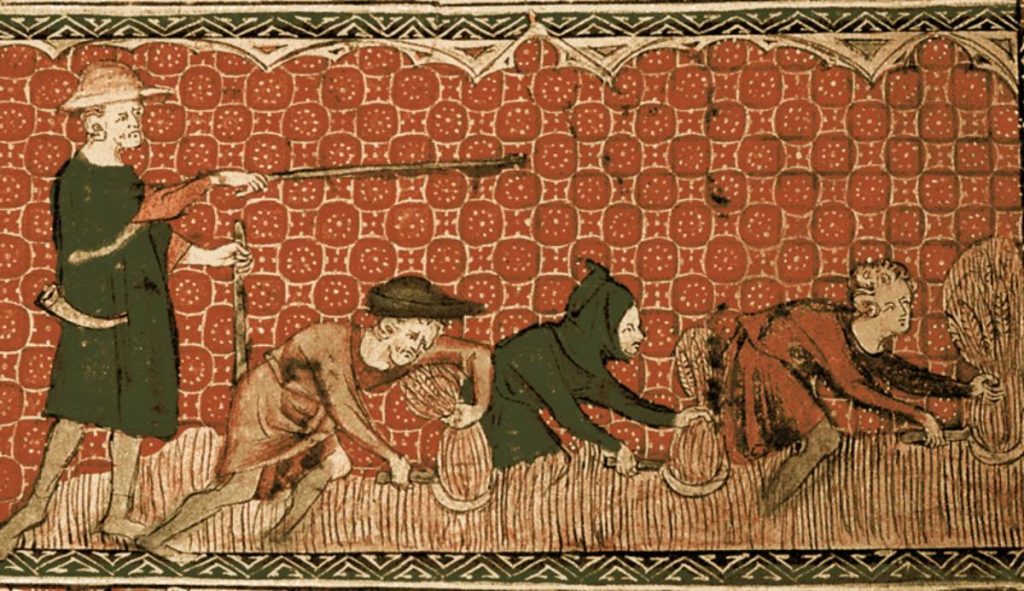
At the same time, many monasteries had accumulated a large amount of wealth, often from underhanded tactics. These monasteries, inherently hypocritical symbols of excess, drew resentment from the laity as economic hardships only grew. As trust in the Catholic Church and its promise of spiritual guidance and protection was already at an all-time low (the clergy had failed to explain or mitigate any of the plague’s effects), many began criticizing the Catholic Church’s role in England, as well as its blatant exploitation of its spiritual role to justify wealth and power.
The distrust in the Catholic church combined with the destabilization of the governing system incited massive civil unrest and political upheaval. The Peasants’ Revolt, beginning officially in 1381, though it had been simmering underfoot for far longer, had both religious and political implications. John Wycliffe, a theologian at Oxford University, sparked the Lollard movement, which advocated for reform of the Church. Criticizing the wealth of the clergy, rejecting transubstantiation, and demanding that the Bible be translated for better accessibility, the movement, though quelled and suppressed quickly, signaled a growing desire for a less hierarchical approach to both religion and society, and would later influence fundamental Protestant reforms in the 16th and 17th century. A Lollard priest, John Ball, as well as other influential figures, would lead the Peasant’s Revolt to directly oppose feudal authority and the Church’s role in maintaining social hierarchies.
The Peasant’s Revolt was the prerequisite to the rise of the yeoman class. Yeomen was essentially the class of the common people– a small, free, somewhat landowner, often assuming the role of a farmer. As serfdom declined (though really, only in title, as landowners still demanded unreasonably high “rent charges” in the form of service from their tenants) and the redistribution of wealth enabled peasants to become yeomen, the notion of becoming free from the shackles of the oppressive medieval hierarchal governing body became increasingly more attractive.
*bonus fact:* most yeomen used the longbow as their weapon of choice, as it symbolized their growing military and social importance… and it was a really good ranged weapon. The longbow eventually became one of Robin Hood’s primary weapons.