
By the early 17th century, Robin Hood had developed into a popular figure within folklore.
Robin Hood’s tales were immediately picked up by the budding Protestants, especially when taking into account his historical antagonism towards corrupt clergymen and wealthy monasteries. He became a useful symbol in recruitment, as many enjoyers of Robin Hood tales could easily make the leap from satirical critique of the Catholic Church’s excesses to true rebellious spirit. Robin Hood’s conflicts with abbots, bishops, and monks, mirrored Protestant arguments against the materialism and Corruption of the Catholic clergy.
As such, throughout the end of the 16th century and into the beginning of the 17th, Robin Hood’s plays and ballads became a vehicle to spread Protestant ideas. These adaptations highlighted his defiance of corrupt authority, drawing rather blatant parallels with the Protestant vision of moral reform and resistance to the Catholic hierarchy.
Alongside this, other changes were made: Robin Hood’s previous devotion to the Virgin Mary, a symbol often reflecting medieval Catholic piety, was often downplayed or altogether omitted in reenactments of his plays. His prior lack of ties to a specific religious tradition was easily adapted into one who practically preached Protestant sentiments to the masses– in short, Robin Hood became a piece of propaganda for the Protestant Reformation, embodying their ideals as a symbol of resistance against institutional corruption.
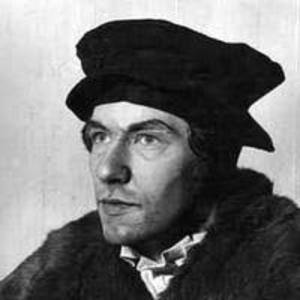
Thus, a now incredibly influential piece of the Robin Hood canon was born: Anthony Munday’s The Downfall and Death of Robert, Earle of Huntington. First written and performed in 1598, during the tail end of Queen Elizabeth I’s reign, The Downfall and Death was partially an effort to bridge the gap between the nobility and the yeomen, or peasants, now, in a time when rumors of corruption without the court had begun to stir, and partially a critique of peaking religious tensions, a common theme in much of Munday’s work. Written as a play within a play, The Downfall and Death begins with the actors of Little John and Friar Tuck discussing the issues referenced within the play itself, not-so-subtly foreshadowing the political upheaval following Queen Elizabeth I’s death by connecting King John with the increasingly unpopular King James I, and ends with blatant criticism of Protestantism, stating, “Now for a face of pure hypocrisie:/Sweete murder, cloath thee in religious weedes,/Raigne in my bosome, that with helpe of thee,/I may effect this Robins Tragedie”(Munday, 1609).
In The Downfall and Death, Robin Hood was redefined as a dispossessed nobleman rather than the traditional yeoman figure. This shift was partially an effort to appeal to the upper classes, bridging the gap between aristocracy and the peasantry by emphasizing shared struggles against corruption and tyranny. By portraying Robin Hood as a betrayed nobleman–a victim of the machinations of the corrupt King John following Richard the Lionheart’s departure for the Holy Land, Munday is essentially drawing parallels between the woes of the upper class and those of the common people, both of which have been wronged by the corruption present in the court. The nobility, wary of the political and religious turbulence under Queen Elizabeth and later King James I, could identify with Robin’s plight as a figure who sought to rectify societal injustices. Munday’s work critiques the burgeoning corruption within the monarchy and court, pointedly highlighting the duplicity and moral decay of the era.
This aristocratic reinterpretation of Robin Hood was not without its critics, as it diverged significantly from the figure’s traditional roots as a champion of the common people. While Munday’s noble Robin sought to unite different social classes against corruption, other tales of Robin Hood resisted this reframing and remained loyal to his origins as a yeoman hero. One notable example is the ballad collection Robin Hood and the Tanner, which preserves the image of Robin as a cunning and resourceful outlaw of humble roots. In this tale, Robin Hood meets Arthur-a-Bland, a tanner by trade, and engages him in physical contests. Despite their initial conflict, the two ultimately form an alliance, once against affirming Robin Hood’s deep connection to the working class and laborers, as well as his role as an everyman hero standing against the inequities of a feudal-ish society.
The coexistence of these two narratives during the 17th and 18th centuries reflects the shifting social dynamics of the time. The aristocratic portrayal of Robin Hood in The Death and Downfall aligned with the upper class’s anxieties about maintaining their status and addressing grievances without undermining the social order. By contrast, tales like Robin Hood and the Tanner resonated with the rural and poor, who faced increasing economic pressures and systemic inequality during the early phases of industrialization and urbanization.